ServicesCeramic Window Film
Ceramic Window Film in Galveston
Ceramic window film uses non-metallic ceramic particles to reject infrared heat while letting daylight through. Rooms stay cooler without a dark or mirrored look. We check your glass, match the film to it, and photograph each window before and after the film goes on.
What Ceramic Film Does and When It Fits
A large share of the heat that comes through a sunny window is infrared light you cannot see. Ceramic film carries a layer of nano-scale ceramic particles that absorb and reject much of that infrared while passing most visible light. You get real heat rejection from a film that can look nearly clear from the street.
Older metalized films do the same job with a thin metal coating. That coating reflects, can block cell and Wi-Fi signals, and its exposed edges can corrode in salt air near the Gulf. Ceramic film has no metal layer, so none of those trade-offs apply.
It is the right call when you want a cooler room and better UV protection but do not want to darken the view or change how the house looks outside. If you want strong daytime privacy instead, our privacy window tinting or reflective window film pages explain those options.
What Our Ceramic Film Installation Includes
- Glass and frame inspection
- We note whether each pane is single, dual-pane or low-E, and check for failed seals, chips and old film. Every finding is photographed so you see what we saw.
- Film matched to the glass
- Film absorbs some heat, which raises glass temperature. On large dual-pane or tinted glass that can cause thermal stress cracks, so we pick a ceramic film whose absorption suits that pane.
- Surface prep
- We scrape the glass with a razor, remove paint overspray and old adhesive, and clean the gaskets. Dust trapped under film shows as a speck forever, so prep takes as long as it needs.
- Precise install
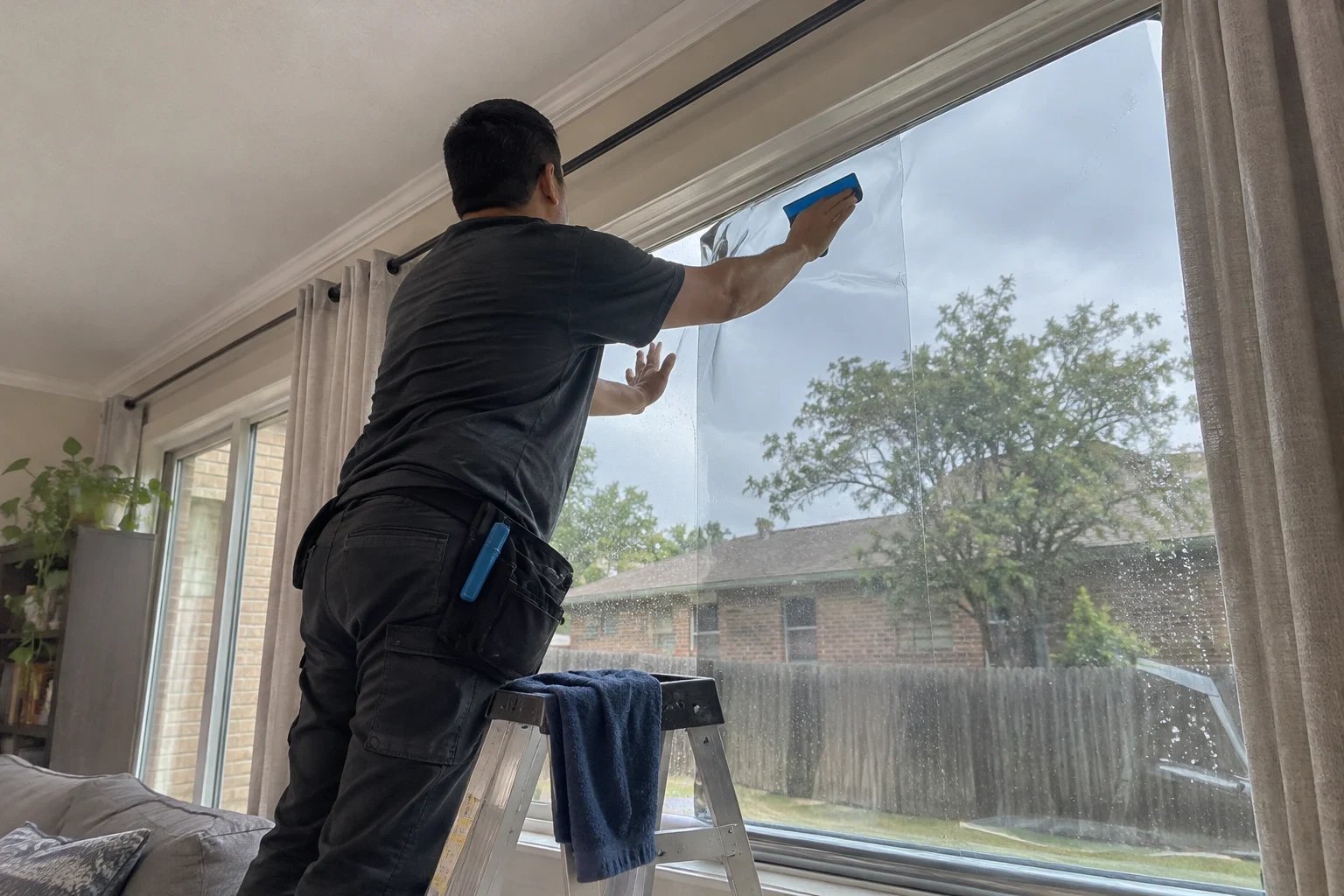
- Film goes on with a slip solution and is squeegeed out to the edges, then trimmed with a small, even gap at the frame so the edge does not catch and lift.
- Removal of failed film
- If old dyed film has turned purple or bubbled, we steam and strip it, then clean off the residue before the new ceramic film goes on.
- Finished-window record and care notes
- You get photos of the finished windows next to how they looked at the start, plus plain instructions on curing time and safe cleaning.
Signs Ceramic Film Is Worth a Look
Afternoon rooms run hot
West and south facing rooms that stay warm long after the AC kicks on are usually taking in infrared through the glass. Ceramic film targets exactly that.
Floors and fabrics are fading
Sun-bleached rugs, hardwood and upholstery point to UV exposure. Ceramic films are typically rated to block nearly all UV.
Glare on screens
If you close the blinds to see a TV or monitor, a light ceramic film cuts glare while keeping the room bright.
Old film is failing
Purple tint, bubbles or peeling edges mean dyed film has broken down. Replacing it with ceramic avoids repeating the problem.
Weak signal near metalized film
Dropped calls by windows with mirrored film are a common sign the metal layer is blocking signal. Ceramic film does not.
What Sets the Price of Ceramic Film
Ceramic film costs more per square foot than dyed film because of the particle layer that does the heat work. Your quote is itemized by window, so you can see where the money goes and choose which rooms to do first.
Total glass area
Square footage is the main driver. A few large sliders can equal many small windows.
Film grade
Ceramic films come in different shades and heat rejection levels. A clearer film with high infrared rejection usually costs more than a darker one.
Access and shape
High transoms, stairwell glass and arched or divided panes need ladders, extra cutting and more time.
Old film removal
Stripping failed film and adhesive adds labor, especially when it has baked onto the glass.
How a Ceramic Film Job Runs
- 1
Phone call
You tell us which rooms bother you and when. We set a time to look at the windows and give you a free quote.
- 2
Measure and document
We measure every pane, identify the glass type and photograph its current condition. Your quote lists each window, the film chosen and why.
- 3
Install day
We lay drop cloths, move what needs moving and work room by room. Most rooms are finished the same visit, and each window is checked under light for specks and edge gaps before we move on.
- 4
Cure and walkthrough
Film can look slightly hazy or show small water pockets for a few days to a couple of weeks while moisture escapes. We walk the windows with you and explain what is normal during curing.
Ceramic Window Film Questions
Will ceramic film make my rooms dark?
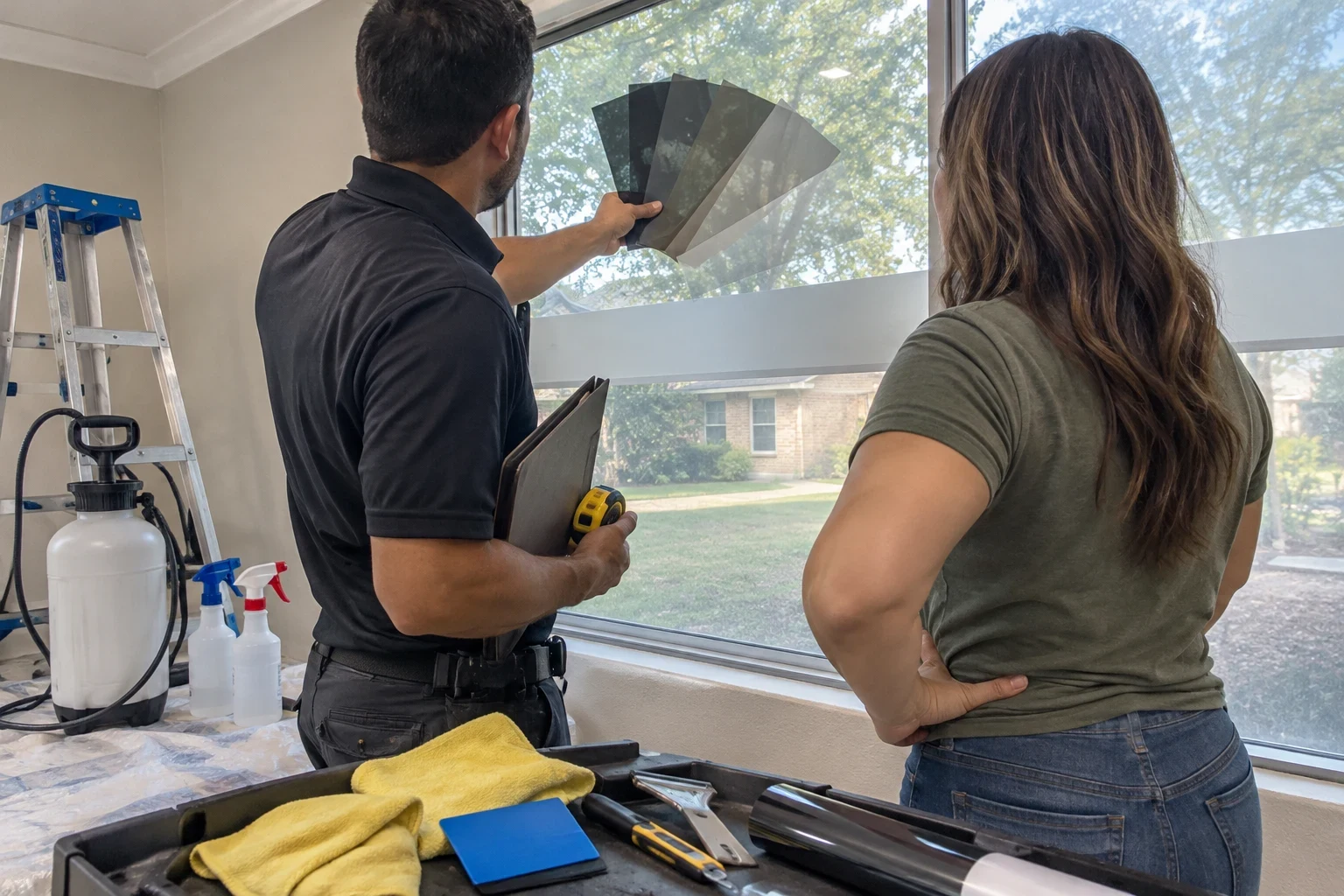
Not unless you want it to. Ceramic film is made in light shades that still reject a good share of infrared heat. We can show samples on your own glass so you see the difference before deciding.
Can ceramic film go on dual-pane or low-E windows?
Usually yes, but the film has to suit the glass. We check the pane type and size first because some combinations raise thermal stress. If a film is a poor match for a window, we tell you and suggest another.
Will it affect my window manufacturer's warranty?
Some window makers address aftermarket film in their warranty terms. It is worth checking your paperwork, and we can help you read what it says about film. Matching the film to the glass is part of keeping that risk low.
Does ceramic film interfere with phones or Wi-Fi?
No. It has no metal layer, so cell, Wi-Fi and GPS signals pass through as they did before.
How do I clean it afterward?
Wait until the film has cured, then use a soft cloth and an ammonia-free cleaner. Avoid razors and abrasive pads on the film side of the glass.
See What Ceramic Film Would Do for Your Rooms
Tell us which windows run hot or glare in the afternoon. We will look, photograph what we find and give you an itemized free quote.