ServicesCommercial Window Tinting
Commercial Window Tinting in Galveston
We install window film on storefronts, lobbies, clinics and workspaces to cut solar heat, glare and UV fading. Before we quote, we measure every pane, record the glass type and its condition, and match a film that is safe for that glass.
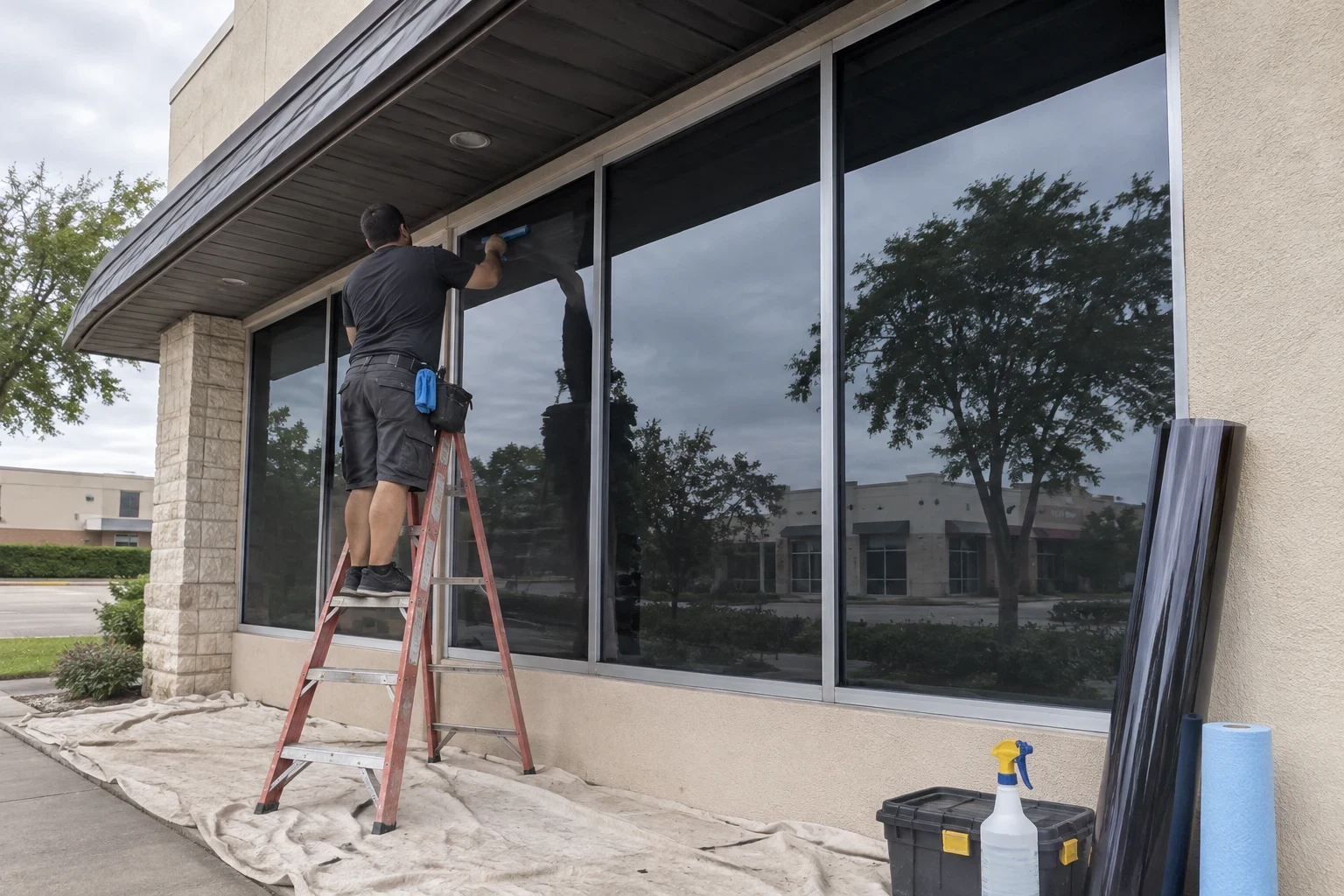
What commercial window film does for a business
Large panes of clear glass let in most of the sun's near-infrared energy, which turns into heat once it hits floors, shelving and people. Window film applied to the inside of the glass rejects a share of that energy before it gets into the room. The result is lower cooling load, fewer hot spots near the windows, less glare on screens and registers, and far less UV reaching merchandise, furniture and flooring.
Commercial glass is not all the same, so the film cannot be either. A single-pane annealed storefront, a tempered entry door and a dual-pane insulated unit each absorb heat differently, and the wrong film on the wrong glass can raise the risk of thermal stress cracks or seal failure. We check each opening first, then recommend from ceramic, reflective, non-reflective or security films based on what that glass can safely carry.
Every job is photo-documented. You see the glass as we found it, the film we chose for each opening, and the finished install, so a property manager or owner who was not on site still knows exactly what was done.
What the work includes
- Glass survey and pane map
- We measure each opening, identify annealed, tempered or insulated glass, and photograph existing chips, scratches, old film residue and failing seals. You get a marked-up list of every pane before any film is ordered.
- Film selection by glass type
- We compare the glass absorption limits against each film's solar absorption rating. That check decides whether a darker or more reflective film is safe on a given unit, or whether a spectrally selective ceramic film is the better call.
- Old film removal
- Faded or bubbling film is steamed and scraped off, and the adhesive is cleaned down to bare glass. New film will not bond properly over old adhesive.
- Precision install and edge trim
- Glass is cleaned with a scraper and filtered slip solution, film is laid wet and squeegeed out, and edges are trimmed with a small gap from the frame so the gasket does not lift the film over time.
- Completion photos and care notes
- We record the finished panes and explain the cure period. Haze and small water pockets are normal for a few weeks while the moisture under the film evaporates.
Signs your building needs window film
The front of the space runs hot
If the thermostat holds fine in back but customers and staff near the glass are sweating in the afternoon, solar heat gain through the windows is the likely cause. Film targets that zone directly.
Glare on screens and displays
Point-of-sale screens, monitors and digital signage that wash out at certain hours point to direct sun hitting the glass at a low angle.
Merchandise fading in the window
Sun-bleached packaging, faded fabric and discolored flooring near the storefront come mostly from UV and visible light. Most quality films block nearly all UV.
Blinds stay closed all day
When shades are drawn just to make the room usable, you lose daylight and street visibility. Film controls heat and glare while keeping the view.
Old film is peeling or purple
Dyed films break down under strong Gulf sun, turning purple and bubbling at the edges. Once that starts, the film is no longer doing its job and should come off.
How a commercial install runs
- 1
Phone call and site walk
You describe the space and the problem by phone. We schedule a walk-through to measure, identify glass and note the condition of every opening.
- 2
Written quote with film options
You receive a line-item quote by pane or elevation, with the recommended film and the reasoning for it. If two films would work, we show the tradeoff in heat rejection and visible light.
- 3
Scheduled install around your hours
We plan the work for slower hours or closed days where we can, and lay drop cloths along sills and floors. Displays near the glass need about two feet of clearance.
- 4
Final walk and handover
We walk the finished panes with you, point out anything still curing, and hand over the before-and-after photos for your files.
What moves the price
Commercial jobs are priced per square foot of glass, then adjusted for the conditions on site. Two buildings with the same window area can quote differently once access and glass type are factored in. We explain each adjustment in the written quote so nothing turns up later.
- Film type
- Ceramic film costs more than dyed or standard reflective film because of its nano-ceramic layer, which rejects heat without darkening or mirroring the glass. Security film is thicker and priced on its own scale.
- Glass area and pane size
- More square footage lowers the cost per foot, but oversized panes that exceed a standard roll width need seaming or wider rolls.
- Access and height
- Second-story glass, clerestory windows and atrium panes need ladders, lifts or extra setup time.
- Removal of old film
- Stripping degraded film and adhesive is slow, careful work and is quoted as a separate line.
- Scheduling
- After-hours or weekend installs to avoid disrupting customers can affect labor cost.
Commercial window tinting questions
Something not covered here? (409) 231-5848
Will the film make the storefront look dark from the street?
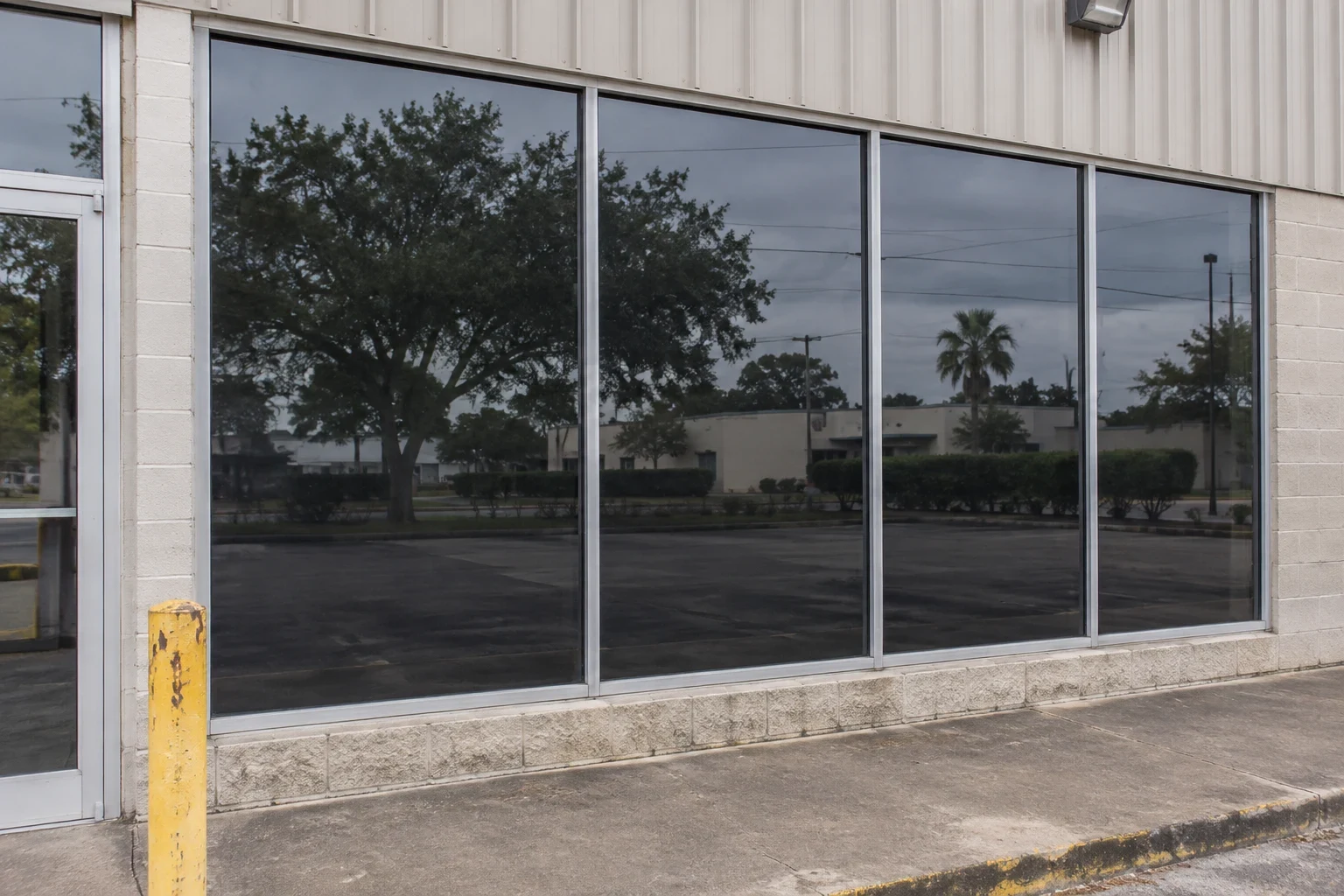
Not if you choose that way. Spectrally selective ceramic film and many non-reflective films keep high visible light transmission while still rejecting a large share of infrared heat. We can show samples on your actual glass so you see the daytime look before deciding.
Can film crack our windows?
Film adds some heat absorption to the glass, which matters most on large annealed panes and some insulated units. That is why we identify the glass first and check each film against its absorption limits. If a film is not safe for a pane, we say so and recommend one that is.
Do we have to close during the install?
Usually not. We work section by section, keep walkways clear, and can schedule early, late or on closed days. The film is applied with a water-based slip solution, so there are no strong fumes.
How long before we can clean the windows?
Wait about 30 days before cleaning the filmed side so the adhesive fully cures. After that, use a soft cloth and an ammonia-free cleaner, never abrasive pads or razor blades on the film.
Do you also handle office interiors and security film?
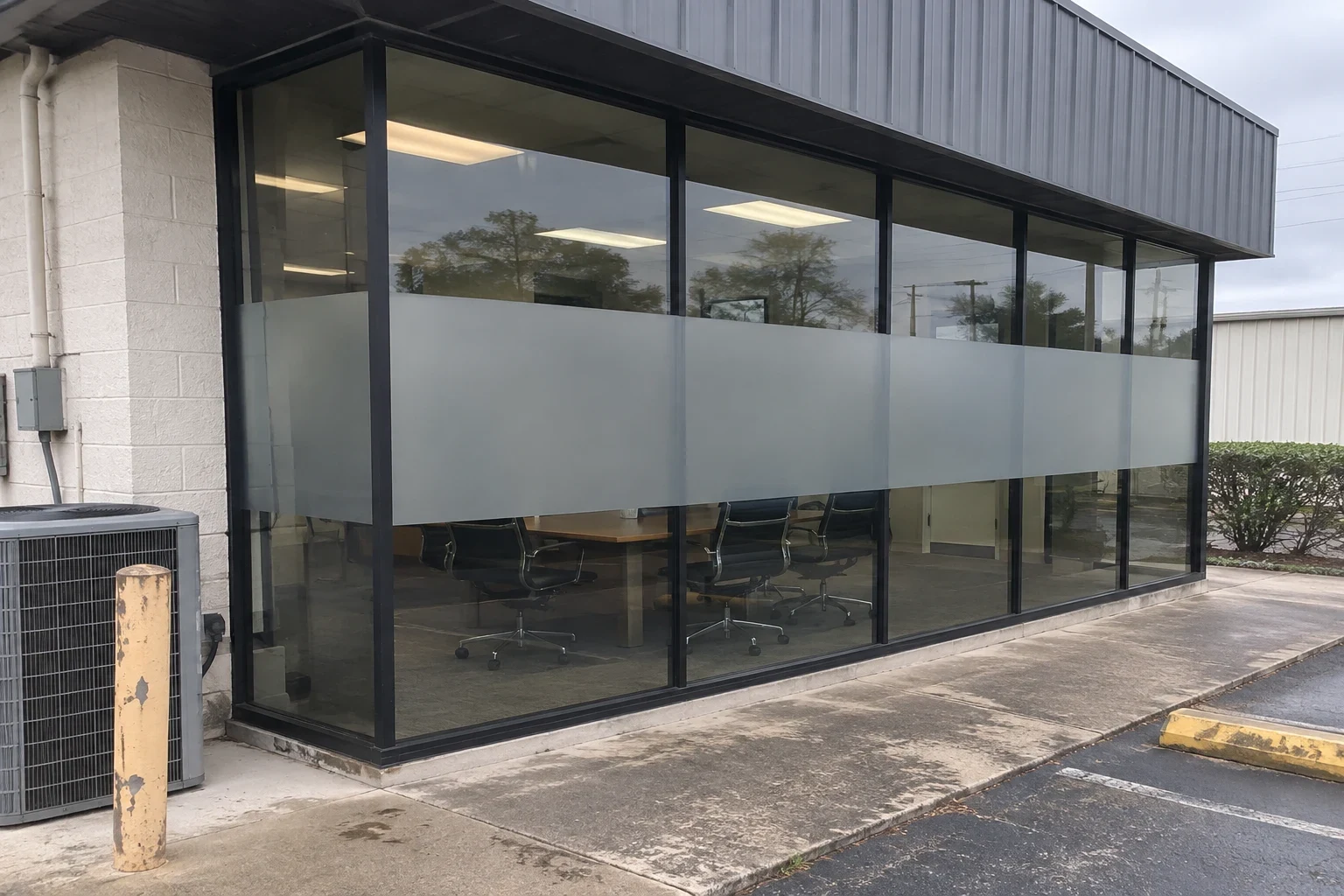
Yes. Our office window tinting covers glare control and privacy for workspaces and conference rooms, and security window film adds a thicker layer that holds broken glass together. Both can be quoted on the same walk-through.
See what your glass needs before you spend
We will measure, identify each pane and note its condition, then give you a clear written quote with the film we recommend and why.