ServicesOffice Window Tinting
Office Window Tinting in Galveston
We install window film that takes the glare off monitors and the heat off desks near the glass, so your staff stop working with the blinds shut. You get photos of each window before we start and after we finish, plus a clear note on the film used.
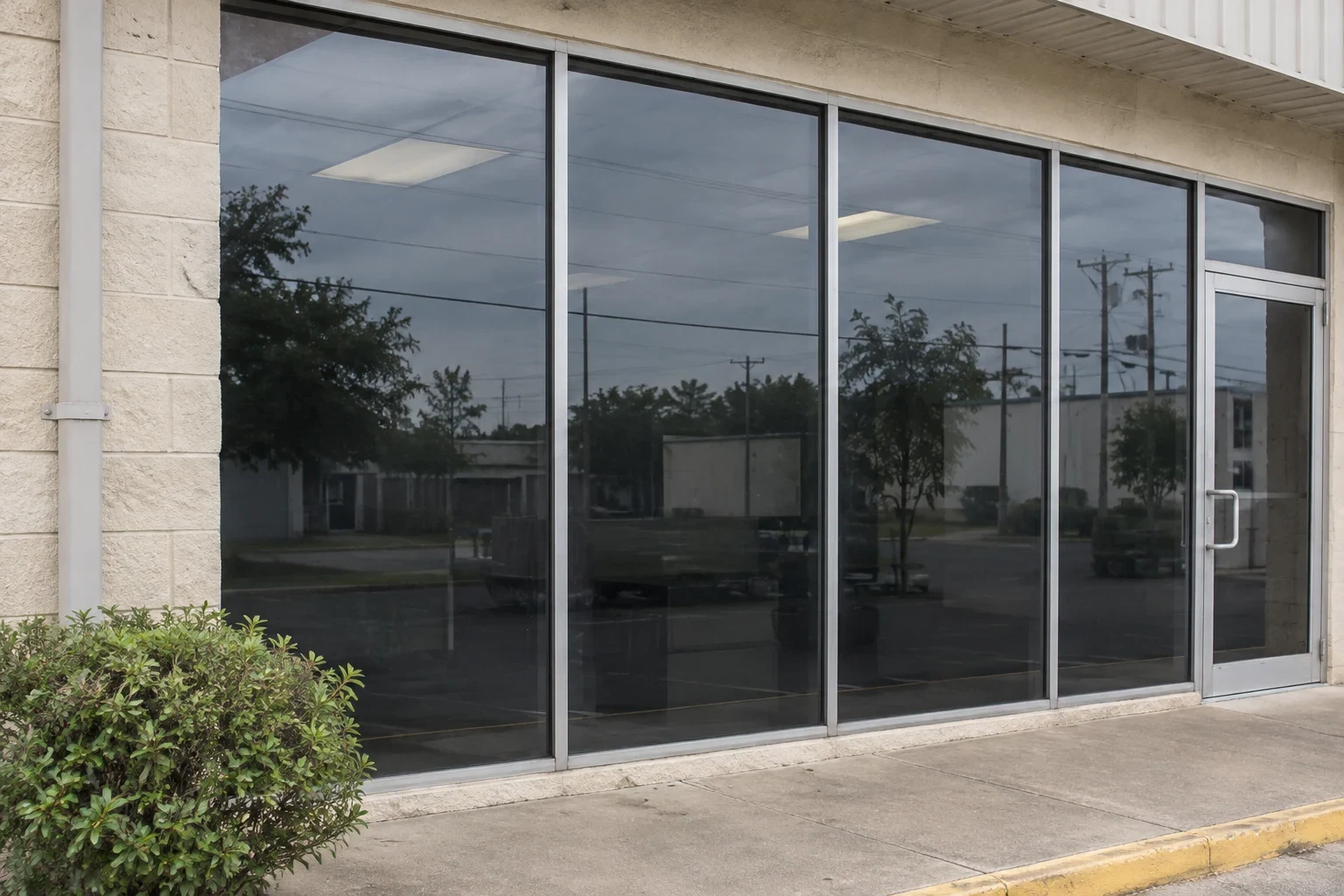
What office window film fixes
Most office complaints about windows come down to two things: direct sun hitting screens and solar heat building up at desks within a few feet of the glass. Clear glass lets in most of the sun's visible light and infrared energy. A film applied to the inside surface rejects a share of that energy and cuts the brightness that washes out a monitor, while you keep the view.
The right film depends on which way the windows face, what the glass is made of and how much daylight you want to keep. A west-facing conference room on the Gulf side of the island needs different film than a north-facing break room. We match visible light transmission and heat rejection to each elevation instead of putting one shade on every pane.
Every job is photo-documented. We record the glass condition, any scratches or failed seals, and the finished install, so you have a record for your landlord, your facilities file or your own reference.
What the work includes
Glass and frame survey
We check each pane for glass type, existing film, edge chips and seal failure on dual-pane units. Those details decide which films are safe to use, and we note anything we find in your job record.
Film matched to the room
Options run from spectrally selective ceramic film that blocks infrared heat while staying light, to darker or reflective films for harsh west light. We put samples on your actual glass so you see the result at a real desk.
Thermal stress check
Large annealed panes, tinted glass and some insulated units can crack if a film absorbs too much heat. We check film-to-glass compatibility before recommending a product and tell you plainly when a film is not a good fit.
Workspace protection
We move or cover desks, power strips and computers near the glass. Installation uses a slip solution, so we lay absorbent drop cloths along sills and floors.
Clean edges and cleanup
Film is trimmed to leave a small, even gap at the gasket so it does not lift. We wipe down sills, remove all scrap and leave the room ready for the next workday.
Signs your office needs window film
Monitors washed out by afternoon sun
Staff tilt screens, raise brightness or tape paper to the glass. That is direct glare film can reduce.
Hot desks near the windows
If people by the glass run fans while others want sweaters, solar gain is overpowering that HVAC zone.
Blinds closed all day
Closed blinds kill the daylight you pay for. Film lets you open them again without the glare.
Faded carpet and furniture
Sun-bleached upholstery and lighter strips of carpet show UV and visible light damage that film slows down.
Passersby can see into the room
Ground-floor offices often need daytime privacy for screens and paperwork. Our Privacy Window Tinting page covers those options in more detail.
How an office install runs
- 1
Walk-through and measurements
We measure every pane, note each window's orientation and record the glass as it is now. You get your quote by phone, broken out by room or elevation.
- 2
Samples on the glass
We apply small film samples so you can judge brightness, color and outward view from the desks that matter.
- 3
Scheduling around your hours
We plan the install for slower periods, early mornings or after close, so meetings and client visits are not interrupted. Larger offices can be done floor by floor.
- 4
Prep and installation
The glass is cleaned and scraped of paint specks and debris, then film is laid on with slip solution and squeegeed to push out water and air. Edges are trimmed and sealed against the gasket.
- 5
Final record and care notes
We photograph the finished windows and explain curing. Light haze or small water pockets are normal for a few days to a few weeks while moisture evaporates through the film.
What moves the price
Office tinting is priced by the glass, not by the room count. The film you choose and how easy the windows are to reach make the biggest difference. We itemize the quote so you can see where the cost sits.
- Square footage and pane count
- Many small panes take more trimming time than a few large ones of the same total area.
- Film type
- Ceramic film costs more than dyed or standard metallized film but rejects more heat at a lighter shade. Reflective and non-reflective films sit at different points in between.
- Access and furniture
- High clerestory windows, glass behind built-in cabinets or crowded cubicles add setup time and may need a lift or extra moving.
- Old film removal
- Failed film with bubbling or purple discoloration has to be steamed and scraped off, along with its adhesive, before new film goes on.
- After-hours scheduling
- Work done outside normal hours or split across several visits can change labor cost, which we spell out up front.
Office window tinting questions
Something not covered here? (409) 231-5848
Will tinting make our office feel dark?
Not if the film is chosen for the room. Light ceramic films keep most of the daylight while still rejecting a large share of infrared heat. We test samples on your glass so you can judge it before committing.
Can you work while our staff are in the building?
Yes, though most offices prefer we work early, late or on a slow day. The install is quiet, but we need clear access to each window and a few feet of space in front of it. We will plan the order of rooms with you.
Do we need landlord or building approval?
Many leases and building managers have rules about film color or exterior appearance, especially for reflective films. Check your lease or ask your property manager before we install. Our job record and the film spec sheet help with that approval.
Is film safe on our dual-pane windows?
Usually, if the film is compatible with the glass. Some films absorb enough heat to stress certain insulated units, so we check the glass type and size first. If a pane is a poor match, we will tell you and suggest a different film.
How soon can we clean the windows or close the blinds?
Blinds can be used right away. Wait about 30 days before cleaning the filmed side, then use a soft cloth and an ammonia-free cleaner so the film's scratch-resistant coat lasts.
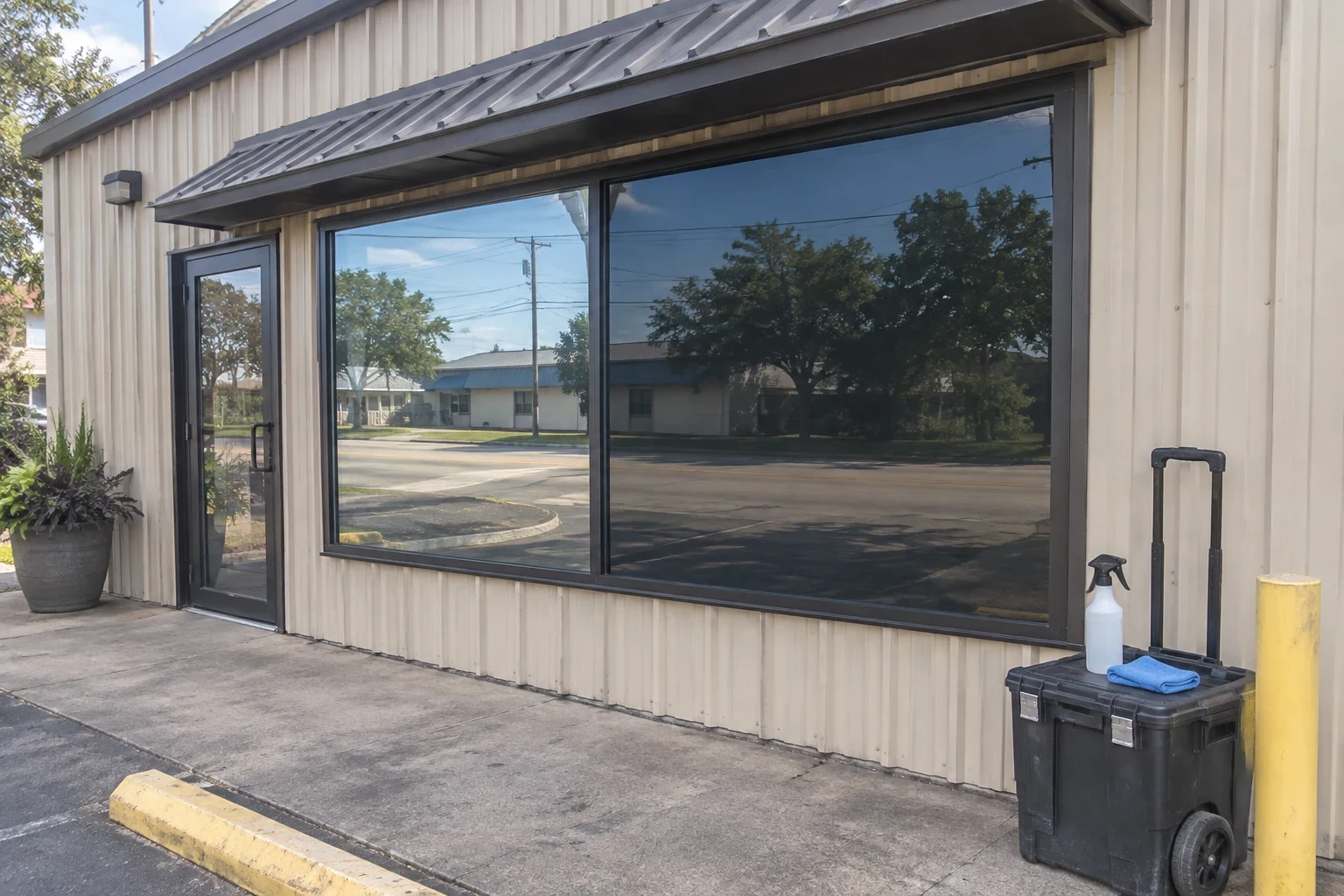
Get your office comfortable at the glass
Tell us which rooms get the worst glare and heat, and we will walk through film options with you. We serve offices across Galveston and nearby towns like Texas City and League City.