ServicesReflective Window Film
Reflective Window Film in Galveston
Reflective film uses a thin metal layer to bounce solar energy off the glass instead of soaking it up. We check each pane, confirm the film is safe for it, and photograph the glass before and after so you see exactly what went on your windows.
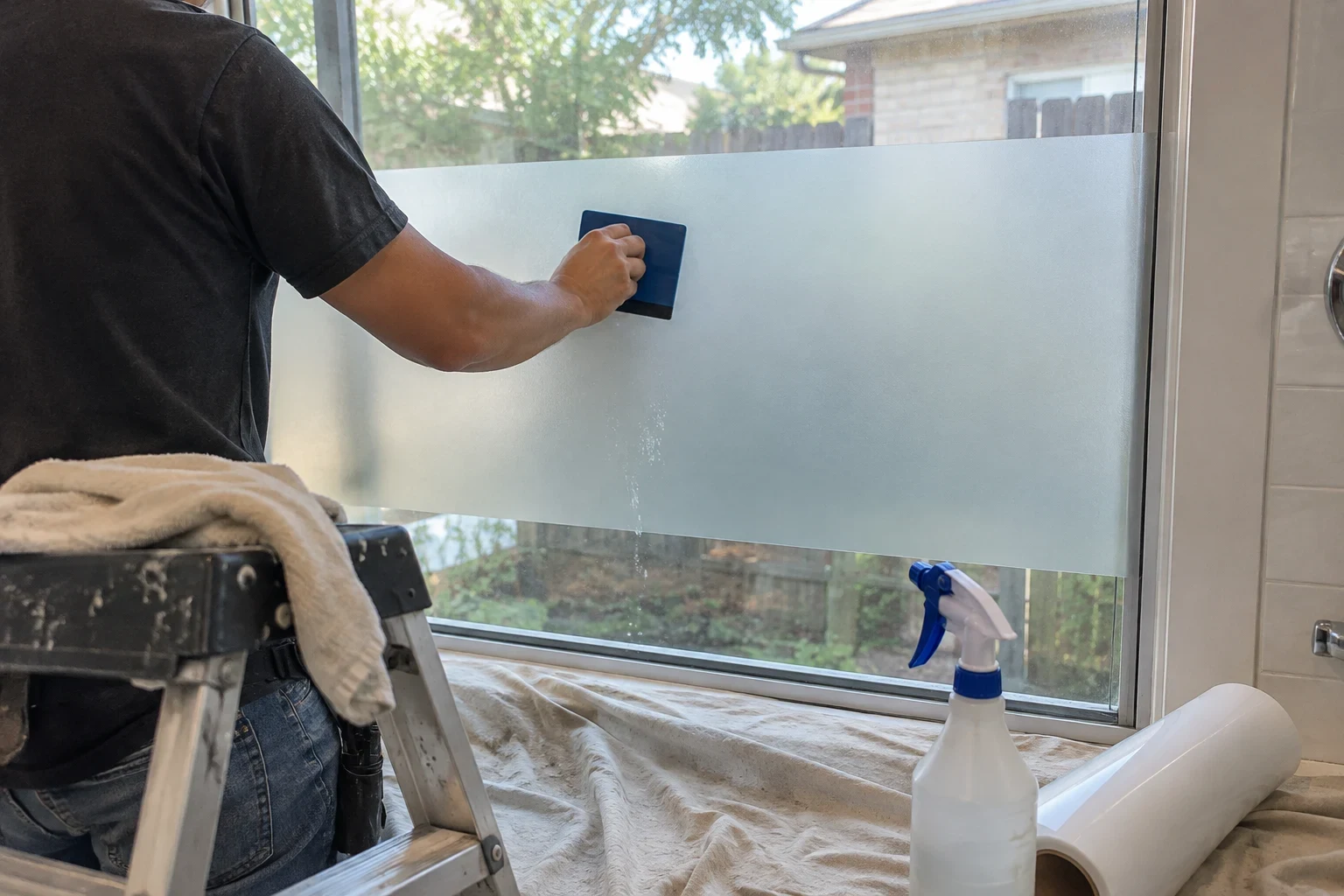
How reflective film keeps a room cooler
Reflective window film is a polyester film with a sputtered or vapor-deposited metal layer, usually aluminum, sometimes blended with other metals. That layer reflects a large share of incoming solar energy back outside. Less heat gets absorbed into the glass and passed into the room, so the room stays cooler and the AC runs less.
It is the strongest option for heat rejection per dollar, and it gives daytime privacy because the outside face looks like a mirror. The tradeoff is the look and the night effect. After dark, when your lights are on, the mirror flips and people outside can see in. If that matters, we will tell you on the first visit and point you to Privacy Window Tinting or Ceramic Window Film instead.
Every job is documented. We photograph the glass condition, the manufacturer stamp in the corner of each pane, and the finished film, so you have a record of what was found and what was installed.
What the job includes
- Glass type check
- We look for the etched stamp that identifies tempered, laminated or low-E glass and note whether the unit is single or dual pane. Reflective film raises glass temperature, so this check decides which film density is safe.
- Thermal stress review
- Large dual-pane units, partly shaded windows and glass with chipped edges carry more risk of stress cracking under film. We flag those panes in writing before anything is applied.
- Film selection by exposure
- West and south windows that take the afternoon Gulf sun usually get a denser reflective film. North and east glass often needs a lighter one, which also keeps the house from looking mismatched.
- Prep and install
- Each pane is scraped with a razor, cleaned of paint specks and old adhesive, then filmed with a slip solution and squeegeed from the center out. We leave a small, even gap at the edges so the film does not lift as the glass expands.
- Before and after photos
- You get a record of every window before prep and after install, with any existing scratches, seal failures or fogging noted first.
Signs reflective film is the right call
A room you avoid in the afternoon
If one room runs several degrees hotter than the rest of the house from midday on, direct solar gain through the glass is the likely cause.
Glare off screens and floors
Sun reflecting off TVs, monitors or tile floors makes a space hard to use. A reflective layer cuts visible light as well as heat.
Faded furniture and flooring
Wood floors, rugs and upholstery that lighten near the window are getting UV exposure. Reflective films block nearly all UV along with the heat.
Daytime privacy from the street
Street-facing glass on a ground floor or a busy lot is easy to see into during the day. A mirror finish blocks that view while you keep the outside view.
What sets the price
Reflective film is priced by the square foot of glass, but the total depends on more than size. Access, glass condition and the film you choose all move it. We put each item on the estimate so you can see where the cost comes from.
Total glass area
More square footage means more film and more labor. Many small divided panes take longer than one large pane of the same area.
Film density and brand
Darker, higher-performance reflective films and dual-reflective films cost more than lighter ones.
Access and height
Second-story, stairwell and transom windows need ladders or staging and add time.
Removing old film
Failed film with peeling or bubbling must be steamed and scraped off first, and old adhesive can take as long as the install.
How install day runs
- 1
Walkthrough and glass check
We go window by window, read the glass stamps, and photograph each pane as it stands. You see the notes before we start.
- 2
Protect and prep
Drop cloths go on sills and floors, and blinds or shutters come down where needed. Glass is scraped and cleaned until it is free of debris that would trap bubbles.
- 3
Apply and squeegee
Film is cut to each pane, wet-applied and pressed out with hard and soft squeegees. Edges are trimmed and checked under light.
- 4
Final photos and care notes
We document the finished windows and clean up. Expect some haze or small water pockets for a few weeks while the adhesive cures, and wait about 30 days before cleaning the film.
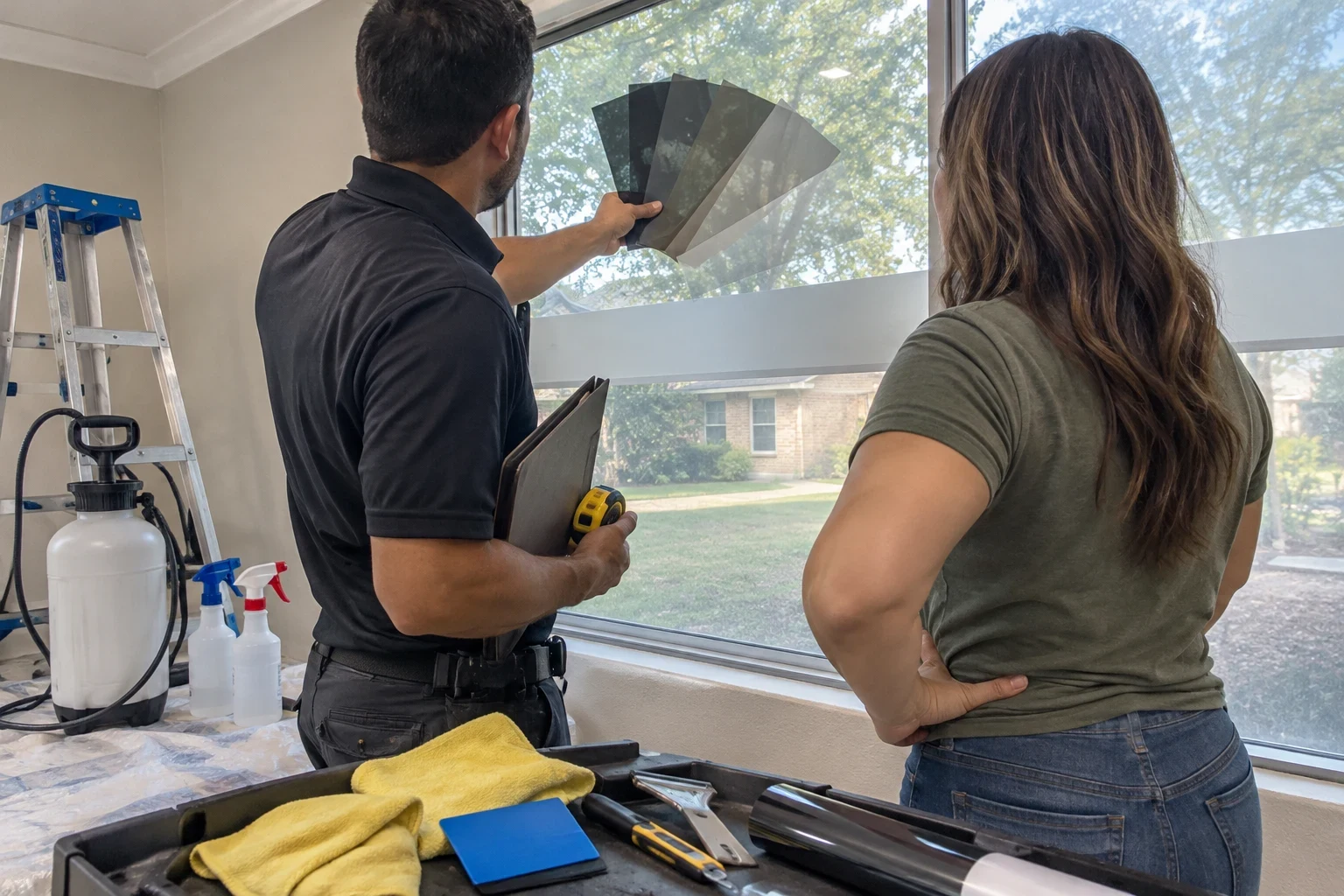
Reflective film questions
Will people be able to see into my house at night?
Yes, when your lights are on and it is dark outside. Reflective film works by light level, so the brighter side sees the mirror. If you need privacy after dark as well as during the day, blinds or a frosted privacy film are the better fit.
Can reflective film crack my double-pane windows?
It can on some glass, which is why we check every pane first. Film raises glass temperature, and large dual-pane or low-E units under partial shade see the most stress. We match the film to the glass and tell you up front if a window should get a lighter film or none.
Will my HOA allow a mirrored look?
Some associations limit reflective finishes on street-facing windows. Check your rules before the install, and we can bring samples so you can show the board the actual film.
How is this different from non-reflective or ceramic film?
Reflective film relies on a metal layer and looks like a mirror outside. Non-Reflective Window Film and Ceramic Window Film keep a natural look, and ceramic rejects heat without metal, so it will not interfere with cell or Wi-Fi signals.
Does it make rooms dark inside?
Somewhat. Reflective films reduce visible light, and denser films reduce it more. We show samples on your own glass so you can see the result before choosing.
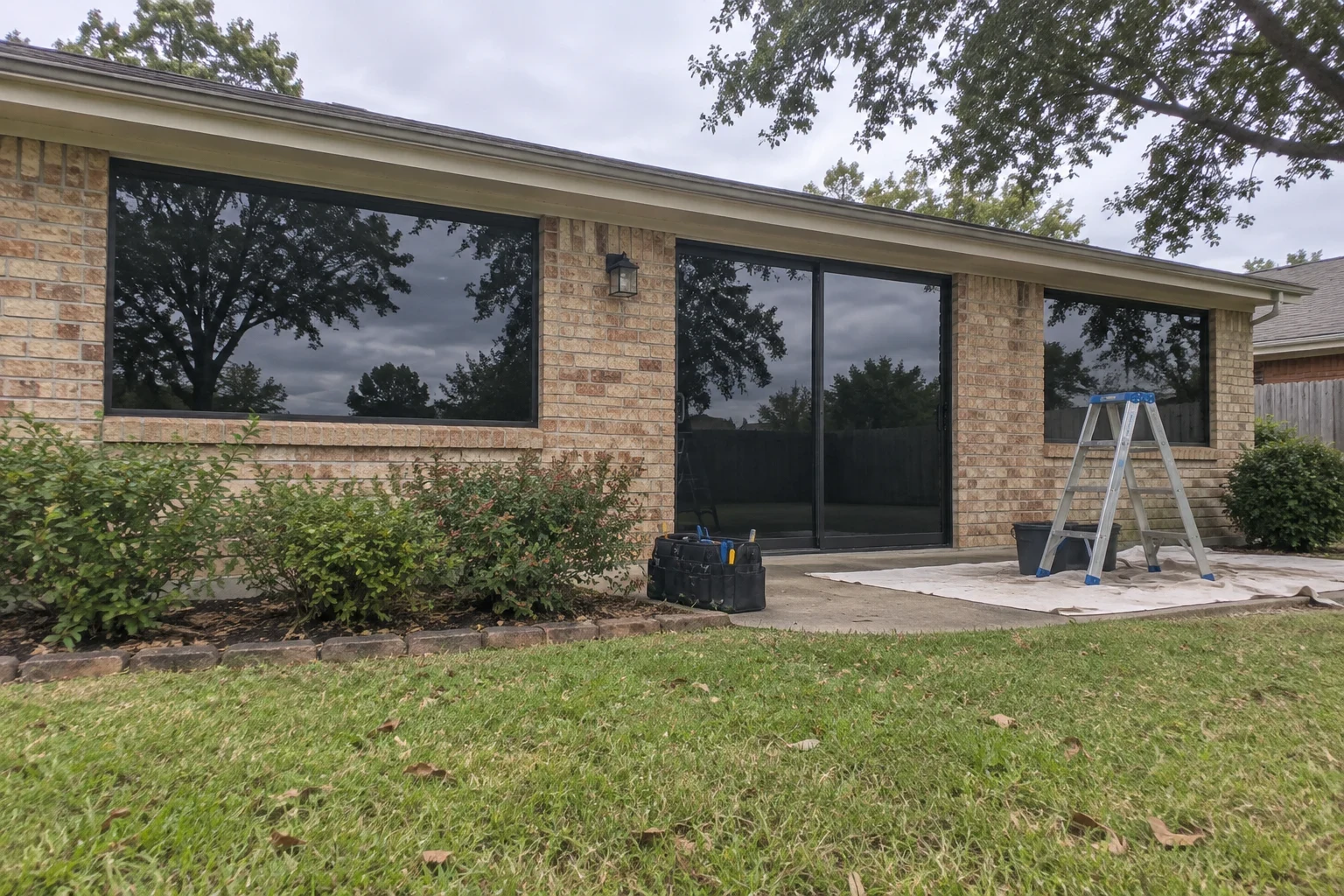
See the film on your own windows
We bring samples, check your glass and record what we find, then give you a clear written estimate. Nothing goes on a pane until you have seen the plan.