ServicesTurf Protection Film
Turf Protection Window Film in Galveston
When a low-E window bounces focused sunlight onto your synthetic turf, the fibers melt in a line that moves with the season. We find the window causing it, photograph the damage and the reflection path, and apply a film that breaks up the beam.
Why a window can melt turf
Modern insulated windows have a thin metallic low-E coating that reflects heat. The two panes are sealed with gas between them, and as air pressure and temperature change, the glass can bow slightly inward. A concave pane acts like a weak mirror lens and focuses reflected sunlight into a hot band on the ground or a nearby wall.
Polyethylene turf fibers soften at temperatures that focused reflection can reach, and vinyl siding, plastic trim and outdoor cushions can warp the same way. The window is not defective. It is doing its job too well in one direction.
Turf protection window film adds a diffusing or lower-reflectance layer to the glass, so sunlight leaving the window scatters instead of concentrating. You keep the window and its energy savings, and the melting stops.
What the work includes
Tracing the reflection
We match the shape and direction of the melt marks to the sun angle and the windows that face the damaged area. Sometimes the culprit is a neighbor's window, sometimes it is your own. We record the marks and the suspected glass so you can see how we reached the answer.
Film selection
We choose a film that cuts the specular reflection while keeping as much view and daylight as the room needs. On a bedroom or living room window that matters more than on a garage or stairwell.
Glass preparation
Each pane is cleaned and scraped to remove paint flecks, sealant residue and mineral spots. Anything left under the film shows as a bubble or a point where the adhesive lets go.
Installation and edge finishing
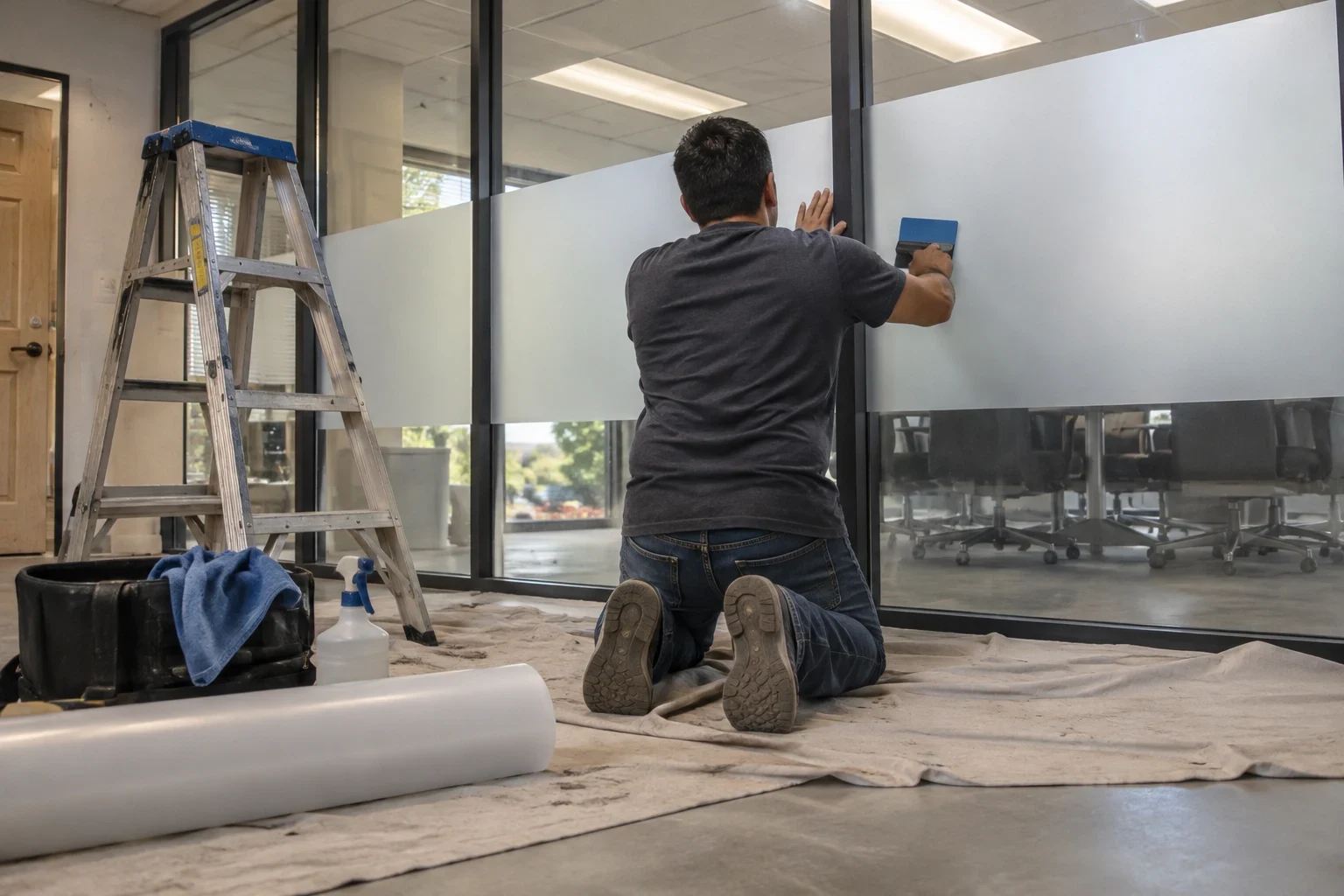
The film is cut to the glass, squeegeed out to remove water and trimmed with a small gap at the gasket so it can seat cleanly. We check the finished pane edge to edge under angled light for trapped debris.
A written record
You get before and after photos and notes on which windows were filmed and why. That is useful if you need to show an HOA or a neighbor what was done.
Signs you need turf protection film
Straight or curved melt lines
Turf with a narrow, shiny or matted streak, often curved, points to focused reflection rather than a hot grill or foot traffic.
Damage that shows up on clear afternoons
Reflection burns follow the sun. If the marks appear at certain times of year and in the same spot, a window is the likely source.
Warped vinyl siding or trim
Rippled siding panels facing a neighbor's low-E windows are a common sign. Siding damage and turf damage often share the same cause.
A bright hot spot you can feel
On a sunny day you may see a glowing patch on the turf or wall that feels noticeably warmer by hand than the surface beside it.
New windows or new turf nearby
The problem often starts right after someone replaces old single-pane windows with low-E units, or after synthetic turf goes in near existing glass.
How the job runs
- 1
Phone conversation
You describe the damage and where it sits. We ask which way the area faces and roughly when the marks appear, then set a time to look.
- 2
On-site inspection
We photograph the melt marks, measure the windows that can see the area and confirm which pane is focusing the light. You get a written quote listing each window and the film for it.
- 3
Installation day
We lay drop cloths, prep the glass and apply the film. Most turf protection jobs cover only a few panes, so the work is short and the room stays usable.
- 4
Cure and follow-up
Film needs time for trapped moisture to dry out, and slight haze in the first days is normal. We walk you through the finished panes and explain what to watch for while it cures.
What moves the price
The cost depends mostly on how many panes need film and how hard they are to reach. We price each window on the written quote so you can see where the money goes before any work starts.
- Number and size of panes
- One sliding door pane is a small job. A wall of tall windows facing the yard takes more film and more labor.
- Access
- Second-story windows or glass above a staircase may need ladders or extra setup time. Ground-floor panes are simpler.
- Film type
- Diffusing films that keep more view cost differently than heavier reflectance-reducing films. We explain the tradeoff for each window.
- Glass condition
- Old sealant, paint overspray or hard-water deposits from salty Gulf air add prep time before film can go on.
Turf protection film questions
Something not covered here? (409) 231-5848
Will the film change how my window looks from inside?
Some films add a light frost or slight tint, and others are close to clear. We show you samples on your own glass during the inspection so you can judge the view before deciding. Rooms where the view matters usually get the clearest option that still breaks up the reflection.
What if the window causing the damage belongs to my neighbor?
That is common. We can document the reflection path from your side and give you a quote for the neighbor's windows, and the film goes on only with the window owner's permission. Neighbors are often willing once they see the melt marks and where the light comes from.
Do I lose the energy savings of my low-E windows?
No. The low-E coating stays in place and keeps working. The film changes how light leaves the glass, not the insulated unit itself.
Can I repair the turf that already melted?
Melted fibers do not recover, so damaged sections usually need to be patched by a turf installer. Putting film on first keeps the new patch from melting in the same spot.
How do I know the film fixed the problem?
We check the area on a sunny day before and after the work. A hot band that is gone or much weaker shows the reflection has been broken up, and you can compare the before and after photos yourself.
Find the window behind the melt marks
Tell us where the damage is and which way it faces. We will trace the source, show you what we found and give you a clear quote for the film.