ServicesNon-Reflective Window Film
Non-Reflective Window Film in Galveston
Non-reflective window film rejects solar heat, cuts glare and blocks UV while your glass looks almost untouched. No mirror finish outside, no dark reflection inside at night. We photograph your windows before, during and after, so you see exactly what went on the glass.
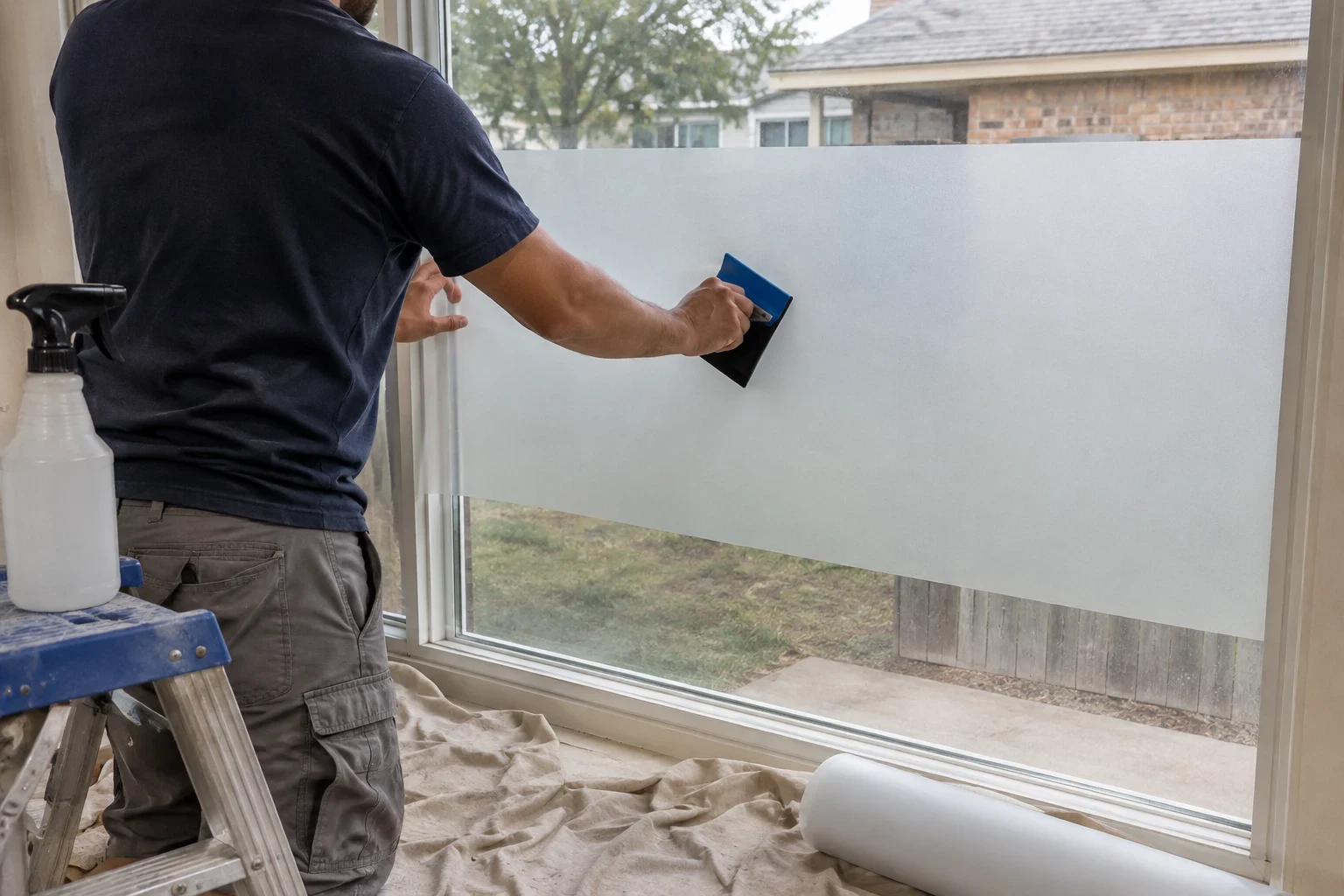
Heat Control That Keeps Glass Looking Like Glass
Most heat-rejecting films work partly by reflecting sunlight with a metal layer. That works, but it gives windows a silver or bronze sheen and turns the inside of the glass into a dim mirror after dark. Non-reflective film does the job differently. It uses ceramic or carbon particles that absorb and block infrared and UV energy, so exterior reflectance stays close to that of bare glass.
This is the right call when you want energy savings and glare reduction but care how the house or building looks from the street, when an HOA or property manager limits mirrored finishes, or when you want to see out clearly at night. If maximum heat rejection matters more than appearance, our Reflective Window Film page covers that option, and Ceramic Window Film goes deeper on the premium end of this category.
We document every job with photos of the glass type, the seals and the finished film, so the record of what was done stays with you.
What the Work Includes
- Glass and frame check
- We identify single-pane, dual-pane, tempered or low-e glass on each window and photograph the label or etching where there is one. Glass type decides which films are safe to apply.
- Thermal stress review
- Absorbing films raise glass temperature. We match each window against the film maker's film-to-glass chart so large dual-pane units are not pushed toward stress cracks or seal failure.
- Film selection by shade and spec
- You see samples on your own glass, with visible light transmission, total solar energy rejected and interior and exterior reflectance explained in plain terms.
- Old film removal
- Bubbled or purple-faded tint is steamed off and the adhesive scraped clean, because new film over old residue shows every flaw.
- Precision install and cleanup
- Film is cut to leave a small gap at the gasket, squeegeed out, and edges sealed. We wipe down sills and take every scrap with us.
Signs Non-Reflective Film Fits Your Windows
Hot rooms you still want bright
West-facing rooms heat up by late afternoon, but you do not want dark glass. A light ceramic film rejects infrared heat while letting most visible light through.
Mirror effect at night
Existing reflective tint makes windows look like black mirrors once the lights are on inside. Non-reflective film keeps the view out.
Appearance rules
Your HOA, landlord or building owner restricts reflective or tinted-looking glass. Low-reflectance film is usually the easiest path to approval.
Faded floors and furniture
Rugs, wood floors and fabric near the windows are losing color. These films block nearly all UV, the main driver of fading.
Screen glare without the gloom
Sun washes out TVs or monitors, yet blinds closed all day make the room feel shut in.
What Moves the Price
Every quote is written by window, so you can see where the cost comes from. Price depends mostly on the film grade you choose and the time the glass takes to prep and install. We give you the quote by phone or after a look at the windows, with no charge for it.
Film grade
Carbon films cost less; nano-ceramic films cost more but reject more heat at the same light level and resist fading longer.
Square footage and pane count
Total glass area sets material use, while many small divided panes add labor because each one is cut and trimmed separately.
Access
Tall transoms, stairwell windows and glass behind built-ins need ladders or scaffolding and extra time.
Removal of old film
Stripping aged tint and adhesive can take as long as the new install, especially on film that has baked in hard sun for years.
How Your Install Day Runs
- 1
Walkthrough and photos
We photograph each window, its glass type and any existing damage such as chipped edges or failed seals, and note it before work starts.
- 2
Protect and prep
Drop cloths go over sills and floors, furniture is moved back, and the glass is scraped and cleaned to remove dust, paint specks and mineral film.
- 3
Apply the film
Film is laid wet with a slip solution, positioned, then squeegeed from center to edge to push out water and air.
- 4
Final inspection
We check every pane in raking light, photograph the finished windows and walk you through the curing period. Small haze or water pockets are normal for a few weeks while moisture escapes.
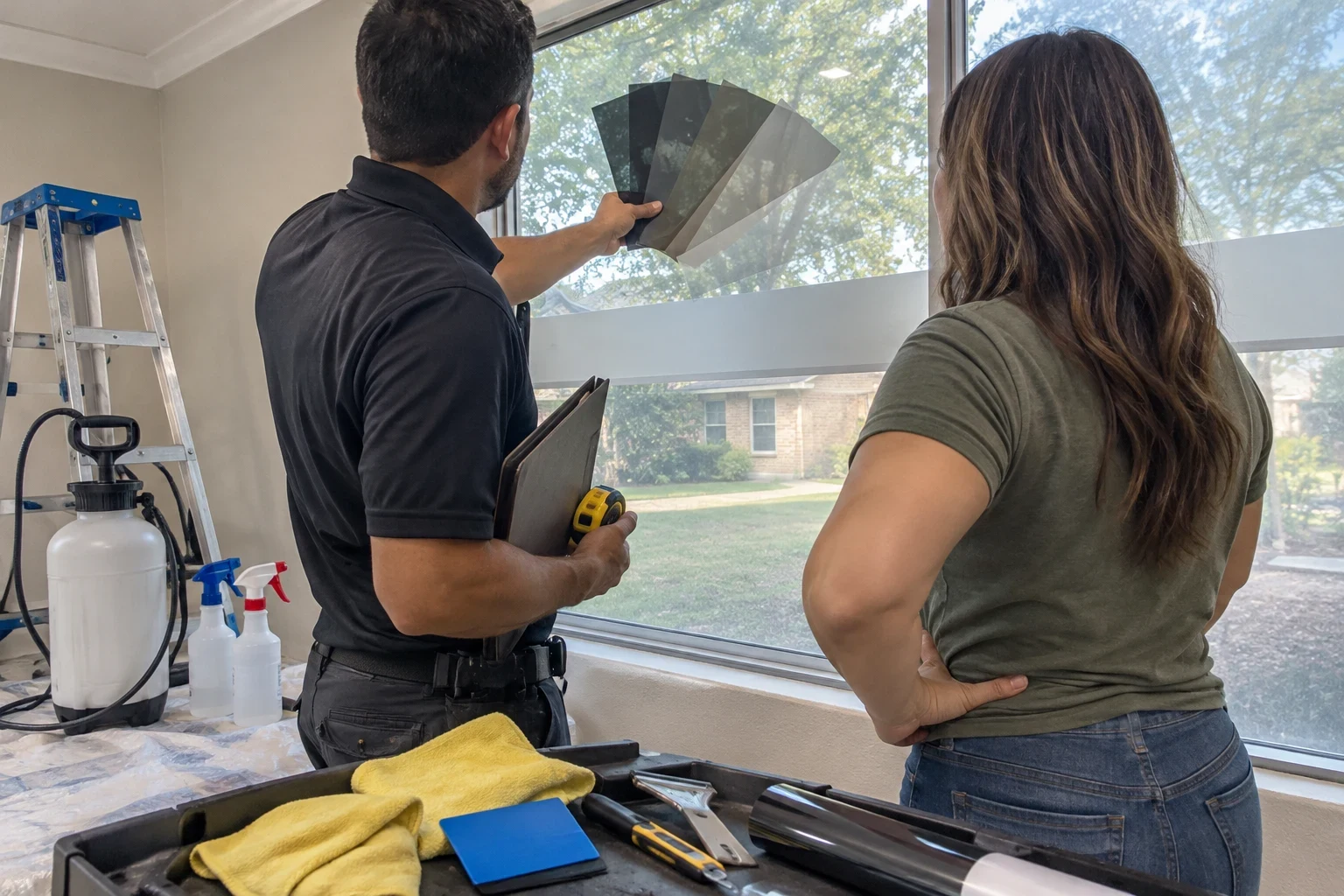
Non-Reflective Film Questions
Will people outside be able to see in?
During the day, darker non-reflective shades reduce how much people can see in, but they do not create one-way privacy like mirrored film. At night with lights on inside, any clear-look film lets people see in. If daytime and nighttime privacy is the goal, our Privacy Window Tinting or Decorative Window Tinting pages cover frosted and blackout options.
Does non-reflective film reject as much heat as reflective film?
Usually a bit less at the same darkness, because reflection is an efficient way to bounce heat. High-grade ceramic films close much of that gap. We show you the total solar energy rejected figure for each sample so you can compare directly.
Is it safe on dual-pane or low-e windows?
Often yes, but not every film on every unit. Absorbing films heat the glass, and large dual-pane or already-coated low-e units can crack from thermal stress. We check the glass and use the manufacturer's compatibility chart before recommending anything.
Will it interfere with phone signal or Wi-Fi?
Ceramic and carbon films contain no metal layer, so they do not block cell or Wi-Fi signals the way some metalized films can. That is one reason people choose them for offices and homes alike.
How do I clean the windows afterward?
Wait about 30 days for the film to cure, then use a soft cloth or squeegee with ammonia-free cleaner. Avoid razor blades and abrasive pads on the filmed side.
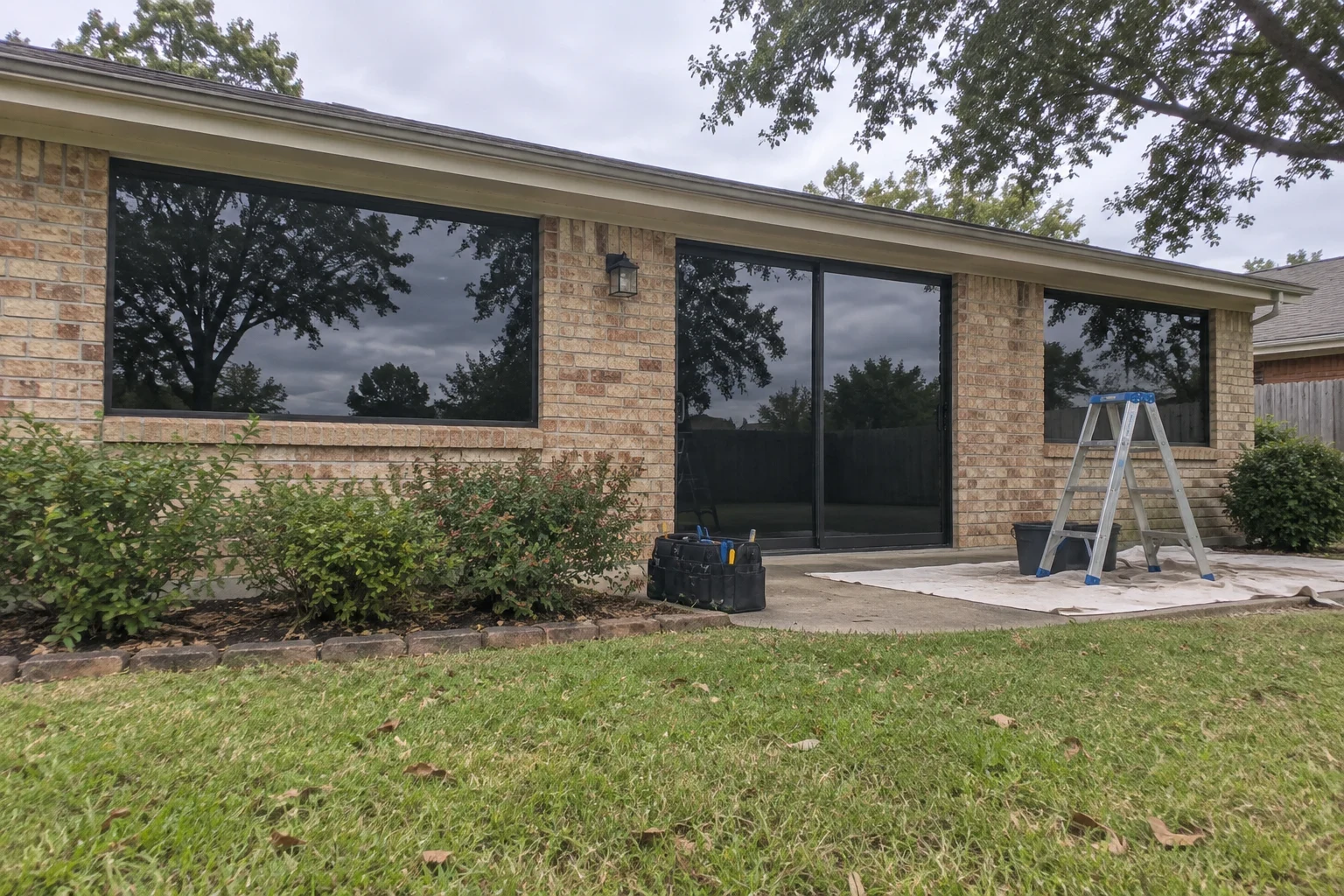
See the Samples on Your Own Glass
Tell us which rooms run hot or glary, and we will talk through film options that keep your windows clear. We serve Galveston and nearby towns like League City and Texas City.