ServicesHome Window Tinting
Home Window Tinting in Galveston
We install window film that rejects solar heat, cuts glare on screens and blocks the UV that fades floors and furniture. Before any film goes on, we check and photograph each pane so you see the glass we started with and the finished result.
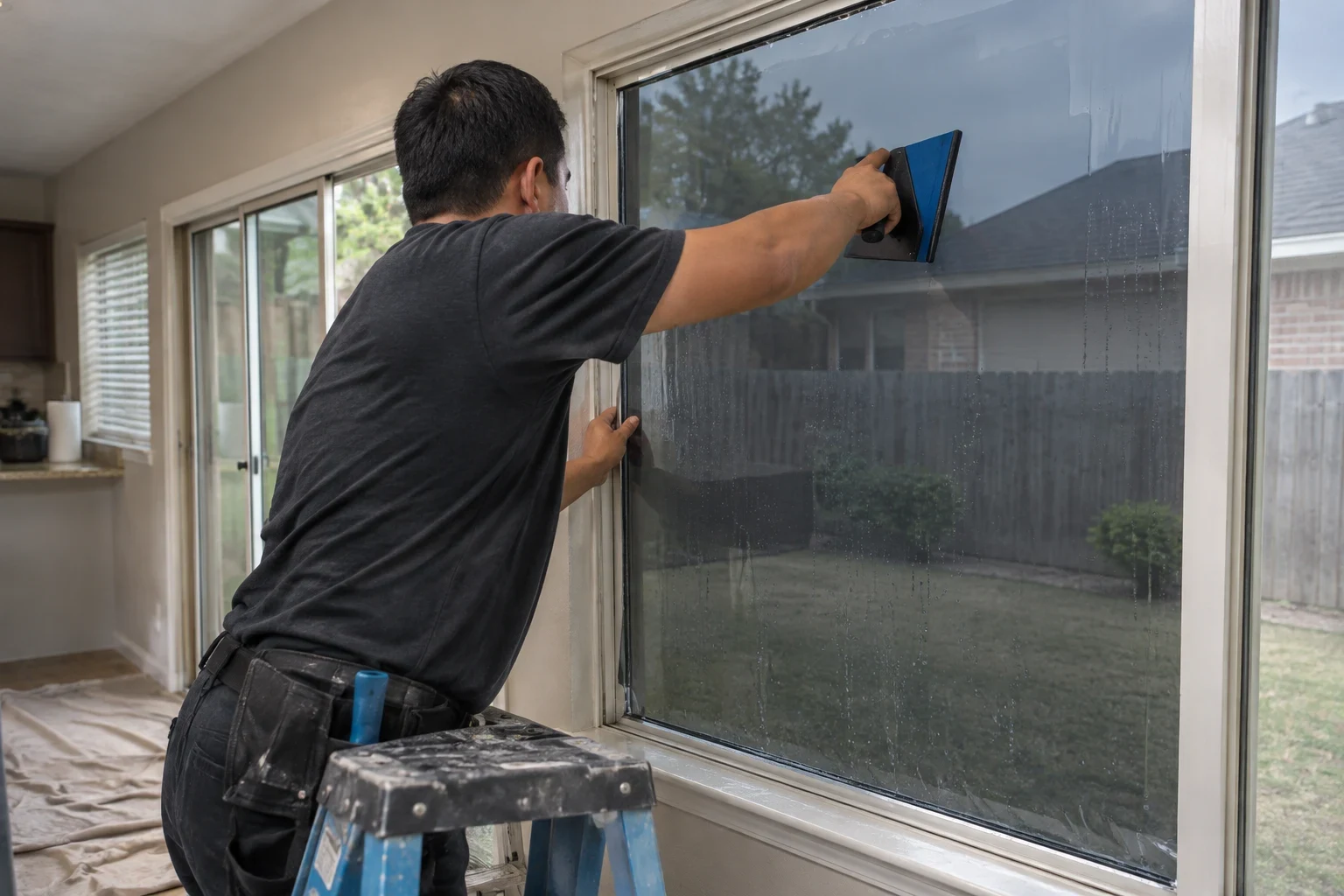
What Window Film Does for a Hot Room
Sunlight comes through glass as visible light, infrared and ultraviolet. Infrared is most of the heat you feel near a sunny window, and UV is the main cause of faded wood, rugs and fabric. A good residential film is built to reject a large share of the infrared and nearly all of the UV, while letting through as much visible light as you choose.
The right film depends on the glass. Single-pane, dual-pane and low-E windows absorb heat differently, and a film that absorbs too much on the wrong glass can add thermal stress at the edges. So we identify the glass type first, then recommend a film. For many rooms that means ceramic window film, which handles heat without the mirrored look.
Strong Gulf sun on west and south walls is where most people notice the difference first. We note chips, scratches or failed seals on every window before we start, so you know the condition of the glass before the film went on.
What Your Installation Includes
- Glass and seal check
- We look at every pane for edge chips, scratches and fogging between the panes. A fogged dual-pane unit has a failed seal, and film will not fix it, so we tell you and photograph it.
- Film matched to the window
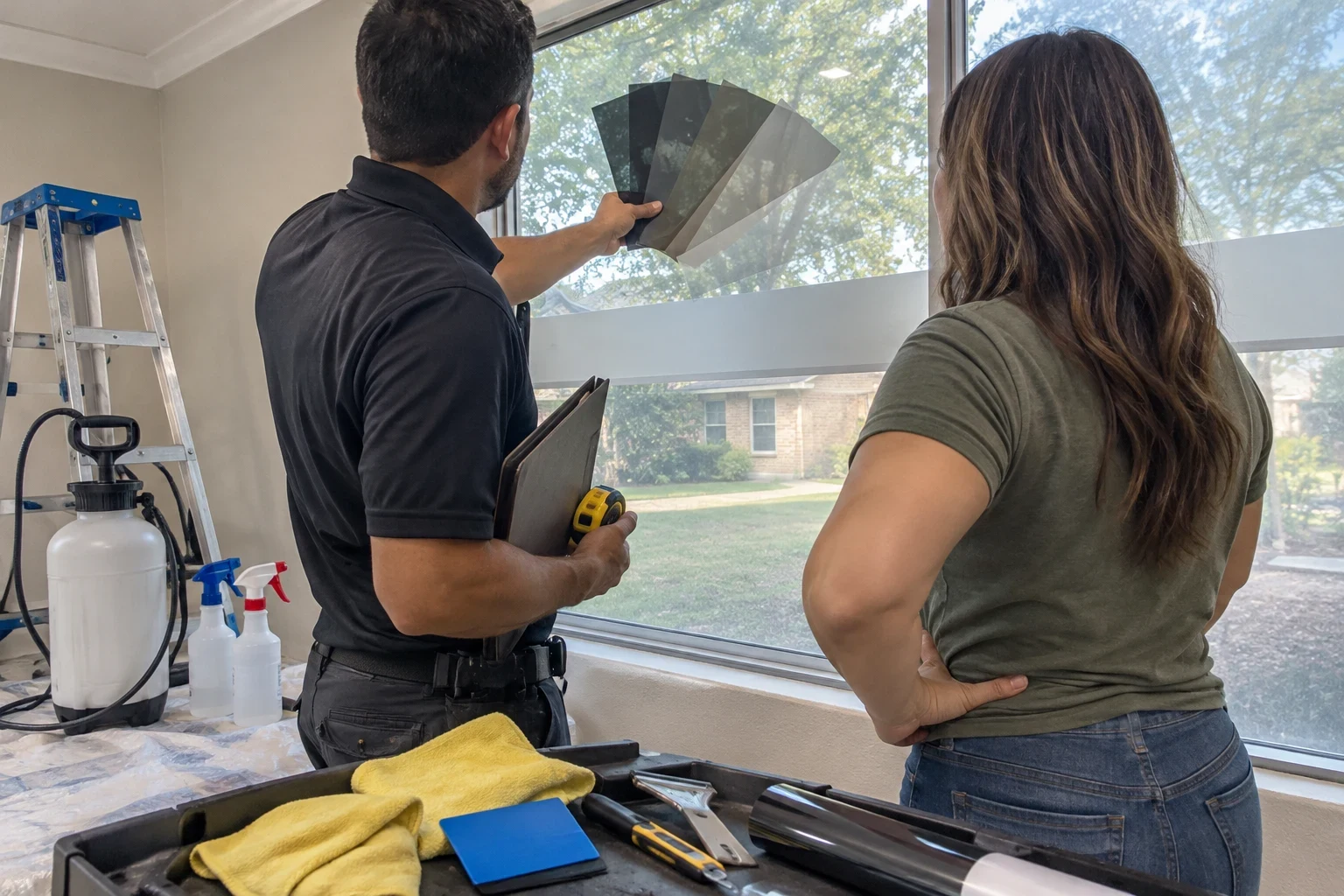
- We pick film by glass type, sun exposure and how dark you want the room. You get the visible light transmission and heat rejection numbers for each option, not just a shade name.
- Careful prep of each pane
- Glass is cleaned, scraped with a razor to remove paint specks and residue, then rinsed. Dust trapped under film shows as a permanent bump, so this step takes the longest.
- Precise trimming at the frame
- Film is trimmed with a small gap at the gasket so it does not lift as the glass expands and contracts. Divided-light grids and arched tops are cut to follow the shape.
- Protected floors and a final walkthrough
- We lay drop cloths under every window because the slip solution drips. When we finish, we photograph each window and walk you through what we did and how to care for it.
Signs Your Windows Need Film
Rooms that overheat by late afternoon
West-facing bedrooms and living rooms that stay hot after sunset are absorbing infrared all afternoon. Film with high heat rejection lowers that load before it reaches the room.
Glare on the TV or computer
If you close the blinds every afternoon just to see a screen, film can cut the glare while you keep the view.
Faded floors, rugs or furniture
A lighter patch of hardwood or a sun-bleached sofa arm is UV damage. It keeps happening as long as unfiltered UV comes through the glass.
An AC that runs all day
When one room is always warmer than the thermostat, the glass is often the weak point. Reducing solar gain there can ease the load on your system.
Neighbors can see straight in
Daytime privacy is a common reason to add film. For rooms where privacy matters most, our privacy window tinting page covers frosted and one-way options.
What Moves the Price
Every quote is based on your actual windows, not a flat package. We measure the glass and list the film and the window count in writing, so you can see where the number comes from.
Total glass area
Price follows square footage and the number of separate panes. Ten small divided lites take more time than one large picture window of the same area.
Film type
Ceramic and spectrally selective films cost more than dyed or basic reflective films because they reject heat without darkening the glass as much.
Access and height
Transom windows, two-story foyers and glass above stairs need ladders or scaffolding and more setup time.
Old film removal
Failed film that is bubbling or purple has to be steamed and scraped off, and the adhesive cleaned, before new film can go on.
How Your Job Day Runs
- 1
Free quote by phone
Tell us which rooms bother you and what you want to fix. We talk through film types and set a time to measure and look at the glass.
- 2
Measure and inspect the glass
We measure each pane, confirm the glass type and photograph its condition. You get a written quote that lists the film and window count.
- 3
Install room by room
We move furniture away from the glass, protect the floor, prep each pane and apply the film with a slip solution and squeegee. Most rooms are back in use the same day.
- 4
Final walkthrough and care notes
We go over the finished windows with you and explain curing. Small water pockets and a slight haze are normal at first and clear as the moisture evaporates, which can take longer in humid weather.
Home Window Tinting Questions
Will window film make my rooms dark?
Not unless you want it to. Clear and light ceramic films reject a lot of heat while letting most visible light through. We show you samples on your own glass so you can judge the look before deciding.
Is film safe on dual-pane or low-E windows?
Yes, when the film is matched to the glass. Some darker, high-absorption films can raise edge temperatures on certain insulated units. That is why we confirm the glass type first and recommend only films rated for it.
Will tinted windows give me privacy at night?
Most reflective films work one way in daylight, when it is brighter outside than in. At night, with lights on inside, people can see in. If you need privacy day and night, frosted or decorative film is the better fit.
How long before I can clean the windows?
Give the film time to cure before cleaning the inside surface, usually a few weeks depending on sun and humidity. After that, use a soft cloth and a non-ammonia cleaner. Avoid abrasive pads and razor blades on the film.
Can window film help keep glass in place if it breaks?
Standard tint holds some fragments, but it is not designed for impact. For that, look at our security window film, which is thicker and built to hold broken glass together.
See What Film Can Do for Your Rooms
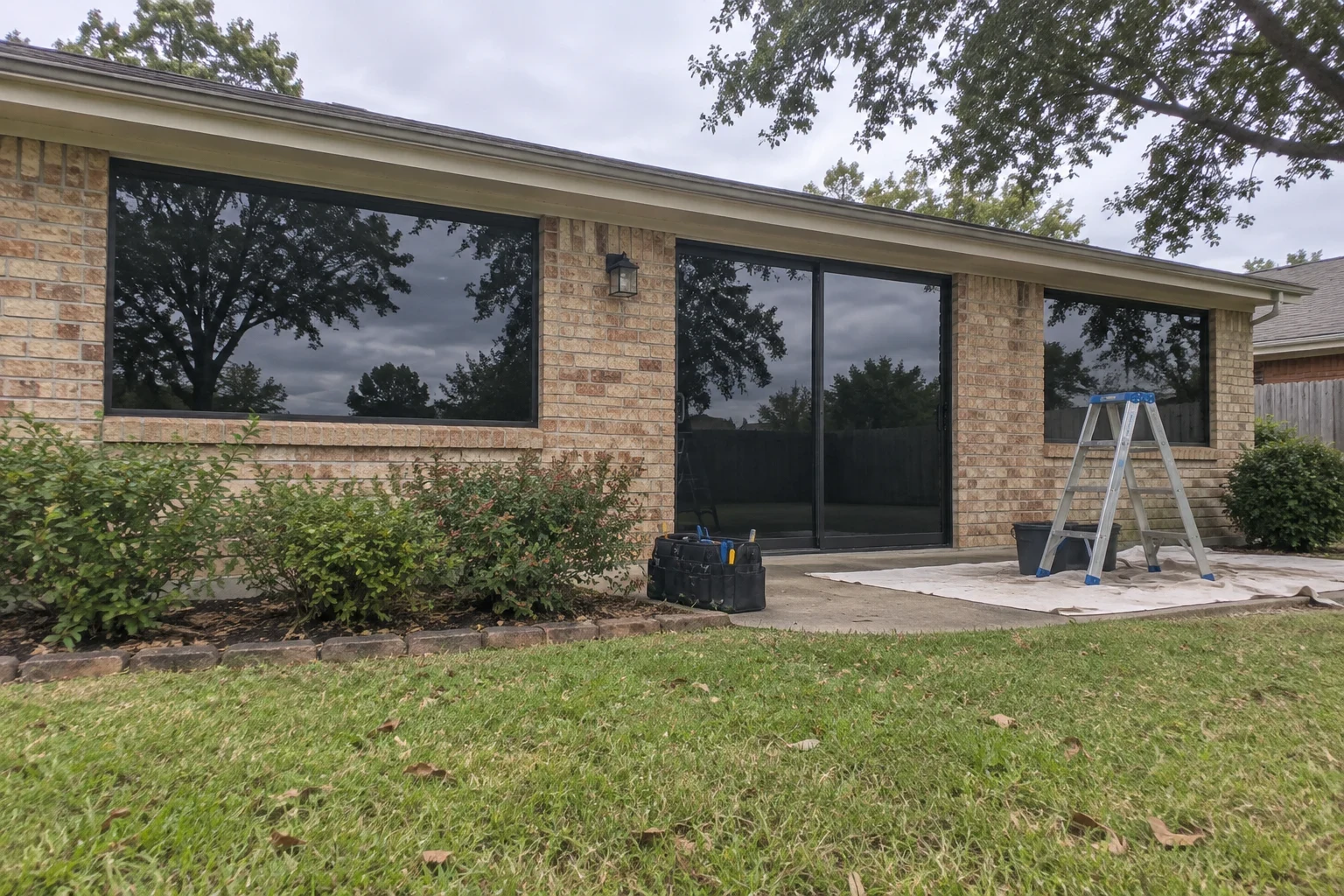
Tell us which windows run hot or glare, and we will explain your film options and what the job involves. Your quote is free, and you will see photos of your glass before and after.